By R.K. Malik & Associates
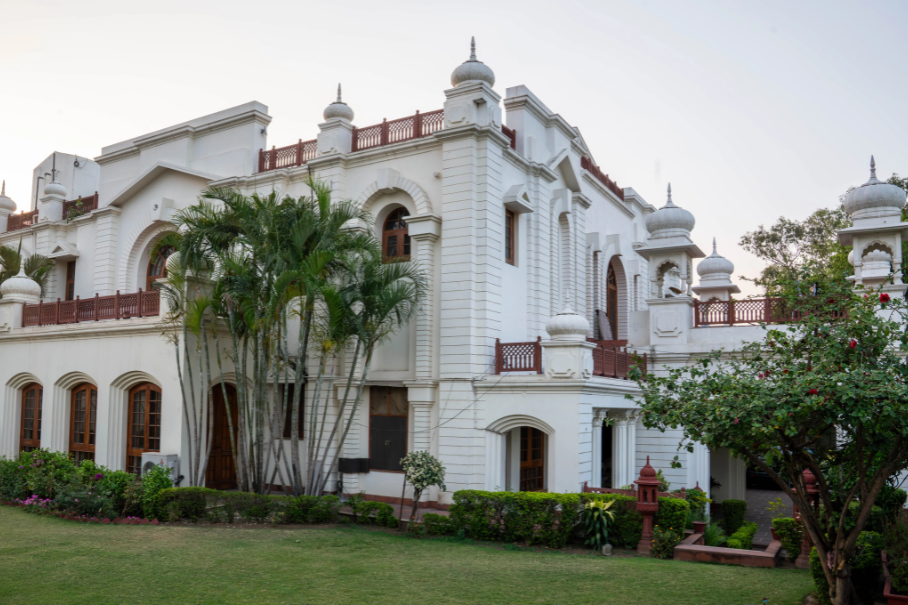
In the age of Instagram and glossy renders, architecture is often reduced to surface appeal. Facades become the face of a project; photographed, shared, and judged before a single step is taken inside. But at R.K. Malik & Associates, we see things differently. For us, a facade is not the end goal; it’s the beginning of a deeper architectural journey. It is not just what a building looks like, but what it feels like to inhabit. This article delves into the essence of facades and how they translate the design of the structure.
Architecture That Begins at the Threshold
Facades, when done right, set expectations that the interior fulfills, extends, and deepens. When disconnected, it becomes a mask, detached from the life inside. Our practice is guided by the belief that every element on the exterior must stem from the logic, function, and emotion of the interior.
Designing from the Inside Out
At R.K. Malik & Associates, we begin with the life within. How will the space be used? Where does the light fall? What emotions should it evoke? These questions shape our spatial planning and, in turn, our facade design. Rather than treating the facade as a decorative skin, we treat it as an extension of the building’s soul. For example, window placements respond to room usage while overhangs and screens emerge from climatic needs. Materials flow naturally from inside to out, creating harmony rather than contrast. This inside-out approach ensures the facade is honest, functional, and emotionally resonant, not just visually impressive.
Structure as a Visual Language
There is beauty in alignment when the structural grid of the building extends from the exterior to the interior. Beams that align with interior walls, columns that fall where they make spatial sense, and proportions that carry through every plane create a subconscious sense of order and rhythm. We see structure not just as engineering, but as an architectural language. When used with clarity, it helps users read space instinctively, making movement and orientation intuitive.
Material Continuity: A Tactile Connection
Materials have memory. When a material wraps from exterior to interior, be it a concrete wall, terracotta jaali, or timber screen, it creates a sense of continuity and rootedness. We often use material continuity as a design device to reinforce architectural integrity. It blurs the boundary between exterior and interior, allowing the building to speak in a single voice.
Crafting Experience Over Making Statements
Many buildings are designed to impress from the outside. But we design to invite presence to make people pause, enter, and engage. A successful facade isn’t the crescendo; it’s the first note in a carefully orchestrated composition. Spaces that reveal themselves gradually, where details unfold over time, and where people feel a deep sense of comfort, connection, and belonging.
Good architecture doesn’t end at the facade; it begins there. It’s not about how the building photographs, but how it lives. Not about form alone, but feeling. At R.K. Malik & Associates, we strive to design architecture that translates across materials, between inside and outside, and most importantly, from logic to emotion.