By R.K. Malik & Associates
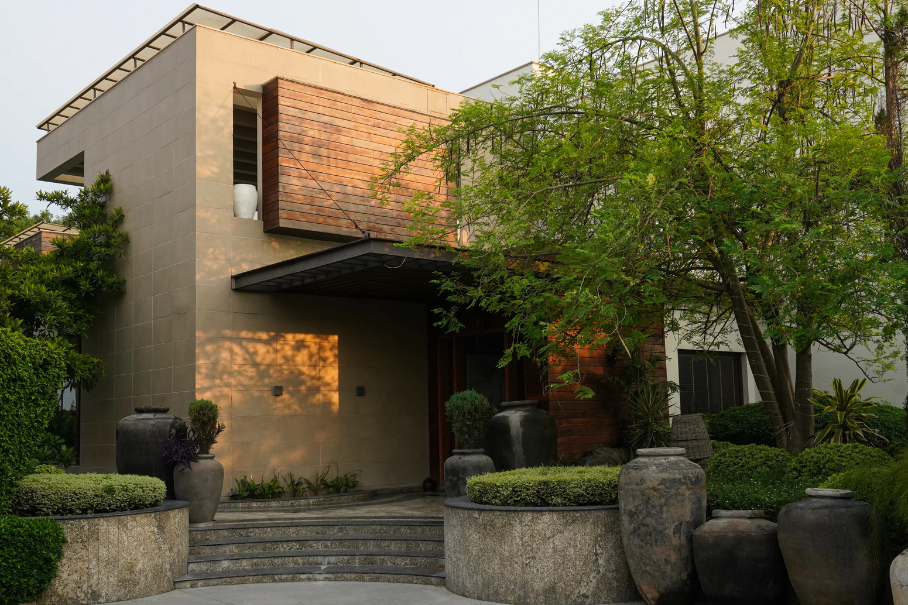
When we think of spatial design, we often focus on layout: how rooms are arranged, how light moves, how people circulate. Floor plans are silent on the front lines, and labels don’t tell us how a surface feels underfoot, how a wall invites the hand, or how materials age gracefully over time. At R.K. Malik & Associates, texture is integral to how a space lives, breathes, and connects with its users. Texture is what transforms a space from simply functional to emotionally resonant. It is what makes a space feel, not just look, complete.
Texture Grounds a Space
The moment you step into a room, your body responds to its surfaces. A floor of textured stone can feel grounding. Brushed wood beneath your feet brings warmth and tactility. Walls that carry grain, ridges, or roughness express a certain honesty that feels rooted, not ornamental. We use texture to anchor emotion. For instance, in meditation areas, we choose matte, earthy surfaces that absorb light and sound. In active zones, we might use crisp, tactile finishes that reflect energy and engagement. Texture becomes the first point of contact between the body and the built space.
Designing Through the Hand
Architecture is not only a visual experience, it’s a physical one. Your hand slides along a railing, brushes against a wall, and turns a doorknob. These everyday gestures form a silent language between people and place. We believe in designing for the unconscious touch, which adds a sense of tactility to the space. In homes and public buildings alike, these small tactile moments create intimacy and connection.
Contrast Creates Character
Just as light needs shadow, smoothness finds meaning through contrast. The interplay of rough and polished, matte and glazed, dense and perforated, allows us to define spaces without altering their form. In our work, we often use textural contrast to subtly mark transitions between zones, between public and private, active and quiet, modern and traditional. These shifts create rhythm and personality within a cohesive spatial language.
Tactile Sustainability
Texture also speaks to time. We prefer materials that age well, those that gather patina, not wear out. Lime plaster that softens with age, stone that retains weathering marks, or copper that oxidises into green, these choices reflect our approach to sustainable beauty. Texture becomes a marker of longevity, resisting the polished perfection of disposability.
While layout gives a space its structure, texture gives it soul. It’s what draws people in, slows them down, and connects them to the moment. It’s what makes a space feel human. At R.K. Malik & Associates, we approach texture as an architectural essential that makes people feel at home.